The financial markets once belonged to Wall Street insiders and institutional investors with deep pockets and expensive technology. Today, that landscape is changing. Retail traders—everyday people looking to grow their money outside traditional jobs—are finding new opportunities through artificial intelligence-powered trading platforms. These systems promise something many side-income seekers want: the ability to participate in markets without spending hours glued to screens or mastering complex trading strategies.
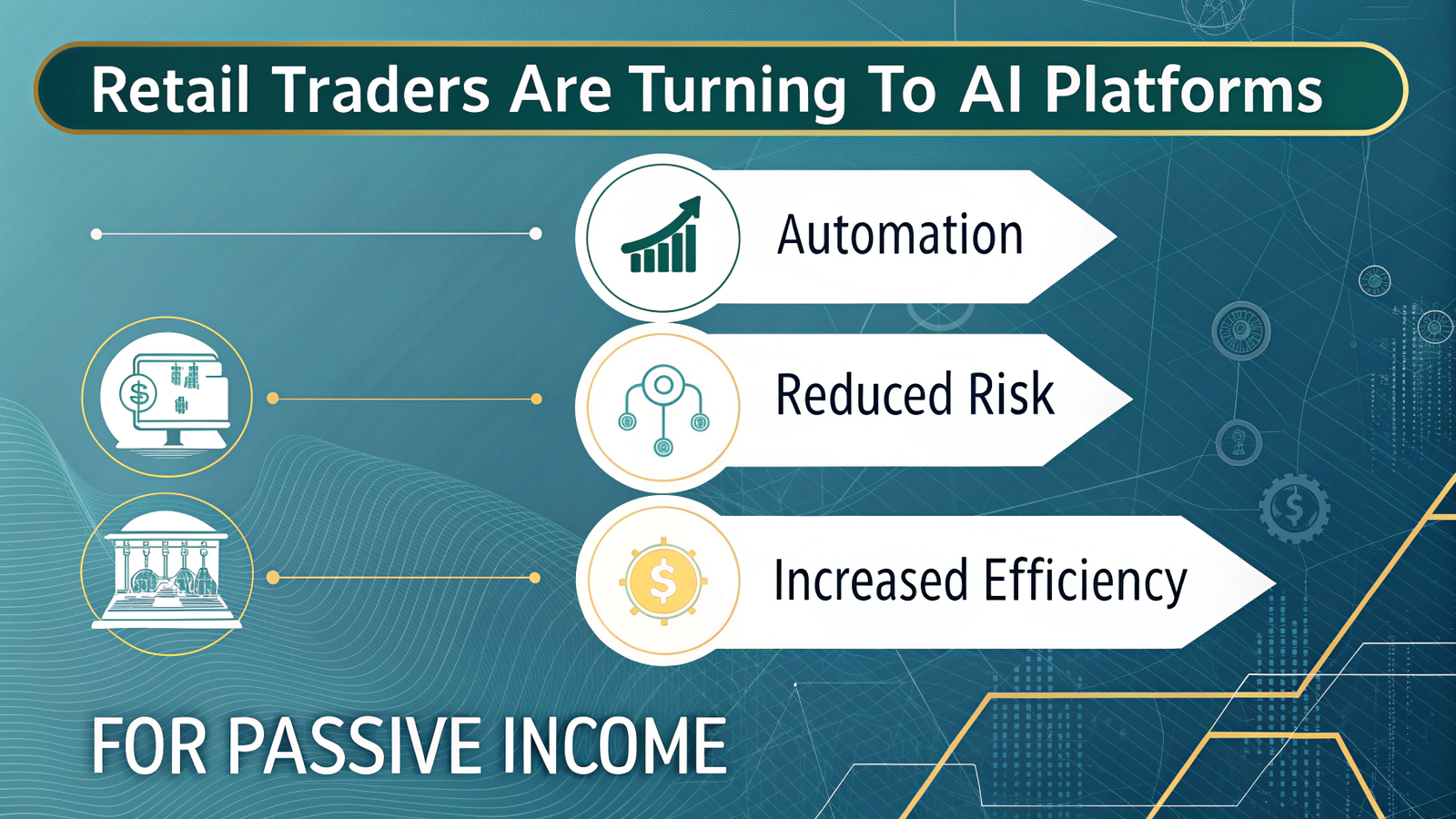
Retail traders are adopting AI trading platforms because these systems automate market analysis and trade execution, removing emotional decision-making while operating around the clock. AI platforms analyze vast amounts of data faster than humans can, identifying potential opportunities in markets like forex that trade 24/7.
The Shift From Traditional Trading to Automated Systems
Traditional trading required significant time investment. Successful traders spent years learning technical analysis, studying chart patterns, and developing the discipline to stick with strategies during market volatility. For someone working a full-time job or managing family responsibilities, this commitment was often unrealistic.
Manual trading also carried emotional challenges. Fear and greed influenced decisions, causing traders to exit winning positions too early or hold losing trades too long. Even experienced professionals struggled with these psychological barriers. The stress of monitoring positions, especially in markets that never sleep like foreign exchange, led many retail traders to abandon their efforts after initial losses.
Algorithmic trading changed this dynamic. Computer programs could execute trades based on predefined rules without emotional interference. However, early algorithmic systems were rigid. They followed fixed parameters and couldn’t adapt when market conditions shifted. This limitation meant traders still needed expertise to adjust their algorithms regularly.
Modern AI platforms represent the next evolution. Unlike basic algorithms, these systems use machine learning to recognize patterns and adjust strategies as markets change. They process news events, price movements, and technical indicators simultaneously—tasks impossible for individual traders to perform manually at scale.
How AI Trading Technology Works for Passive Income
AI-driven trading platforms operate by analyzing market data in real-time and executing trades based on identified patterns and inefficiencies. For the forex market specifically, these systems monitor currency pairs across global exchanges, looking for price discrepancies or technical signals that suggest potential profit opportunities.
The process typically involves several components working together:
- Data collection: The system gathers information from multiple sources including price feeds, economic calendars, and market sentiment indicators
- Pattern recognition: Machine learning algorithms identify correlations and patterns that may indicate future price movements
- Risk assessment: The platform evaluates potential trades against user-defined risk parameters before execution
- Trade execution: When criteria are met, the system automatically enters and exits positions at institutional-level speeds
- Continuous learning: Advanced systems adjust their approach based on performance outcomes and changing market dynamics
For someone seeking passive income, this automation means the platform works continuously without requiring constant supervision. A korvato trading system, for example, operates 24/7 monitoring forex markets that span different time zones, executing trades even while users sleep or focus on their primary careers.
However, “passive” doesn’t mean “risk-free.” Users still need to set appropriate risk levels, understand their capital allocation, and monitor overall performance. The AI handles execution and analysis, but traders maintain control over their accounts and ultimate investment decisions.

Why Forex Markets Attract AI Trading Systems
The foreign exchange market has become a primary focus for AI trading platforms, and the reasons are practical. Forex is the largest financial market globally, with trillions of dollars traded daily. This massive volume creates liquidity—the ability to enter and exit positions quickly without significantly affecting prices.
Unlike stock markets that operate during specific business hours, forex trades around the clock from Sunday evening through Friday afternoon (U.S. time zones). This continuous operation suits automated systems perfectly. An AI platform doesn’t need sleep or breaks, allowing it to capitalize on opportunities that emerge during Asian, European, or American trading sessions.
The forex market also offers relatively lower barriers to entry compared to other markets. While stock trading often requires significant capital to diversify properly, currency trading allows for smaller position sizes while still accessing major global currencies. This accessibility aligns with the goals of retail traders seeking to start building passive income streams without large upfront investments.
Market inefficiencies—small price discrepancies that exist briefly before the market corrects them—occur regularly in forex due to the decentralized nature of currency trading. AI systems excel at identifying and acting on these momentary opportunities faster than human traders can react.
The Appeal for Side-Income Seekers and Casual Investors
The demographic turning to AI trading platforms reflects broader economic trends. Many people find traditional employment income insufficient to meet financial goals or build long-term wealth. Side hustles have become common, but most require trading time for money—driving for rideshare services, freelancing, or taking second jobs.
AI passive income platforms offer a different proposition: the potential to generate returns from capital rather than labor hours. For someone with savings sitting in low-yield accounts, automated trading presents an alternative way to put that money to work.
Several factors make these platforms particularly appealing to casual investors:
| Feature | Benefit for Casual Investors |
|---|---|
| Automation | No need to learn complex trading strategies or monitor markets constantly |
| 24/7 Operation | System works during regular job hours and overnight |
| Emotion Removal | Decisions based on data rather than fear or excitement |
| Accessibility | User-friendly interfaces designed for non-professionals |
| Scalability | Can start with smaller amounts and adjust as comfort grows |
The rise of fintech startups has accelerated this trend. Companies focused on democratizing financial technology have made tools once available only to hedge funds and institutional traders accessible to individuals. These platforms typically offer educational resources, customer support, and transparent reporting that help users understand what’s happening with their capital.
Mobile accessibility also plays a role. Modern trading apps allow users to monitor their accounts from smartphones, checking performance during lunch breaks or commutes without needing to actively manage positions. This convenience fits the lifestyle of people balancing multiple responsibilities.
Important Considerations and Realistic Expectations
While AI trading platforms offer genuine advantages, retail traders should approach them with realistic expectations and awareness of inherent risks. All trading involves the possibility of loss, and automation doesn’t eliminate this fundamental reality.
Market conditions change, and no system—regardless of sophistication—can predict future movements with certainty. Economic events, geopolitical developments, and unexpected news can create volatility that impacts trading performance. Past results from any trading system, AI-powered or otherwise, don’t guarantee future outcomes.
Users should consider several factors before committing capital:
- Risk tolerance: Only invest money you can afford to lose without affecting your financial stability
- Time horizon: Understand that trading results can vary significantly over short periods
- Platform reputation: Research the company’s background, regulatory status, and user reviews
- Fee structure: Understand all costs associated with using the platform
- Control and transparency: Ensure you maintain access to your capital and can see how the system operates
Responsible platforms provide clear information about risks and don’t promise guaranteed returns. They give users control over risk parameters and allow withdrawal of funds. Transparency about how the AI system makes decisions, even in simplified terms, helps users make informed choices about their participation.
Education remains important even when using automated systems. Understanding basic market concepts, how leverage works, and what factors influence currency prices helps users set appropriate expectations and make better decisions about their account settings.
Looking Ahead in AI Trading Technology
The trend toward AI-powered trading platforms shows no signs of slowing. As machine learning technology improves and more data becomes available for analysis, these systems will likely become more sophisticated. Competition among fintech companies continues driving innovation and potentially lowering costs for retail users.
Regulatory frameworks are also evolving. As more retail traders use these platforms, financial authorities are developing guidelines to protect consumers while allowing innovation. This regulatory attention, while sometimes seen as restrictive, ultimately benefits serious traders by establishing standards and weeding out questionable operators.
The democratization of trading technology represents a significant shift in financial markets. Tools that required millions in infrastructure investment a decade ago now operate on cloud computing platforms accessible to startups. This technological progress has created opportunities for retail traders that simply didn’t exist in previous generations.
For side-income seekers and casual investors, AI trading platforms offer a legitimate option worth considering as part of a diversified approach to building wealth. They’re not magic solutions or get-rich-quick schemes, but rather sophisticated tools that, when used responsibly with appropriate risk management, can potentially generate returns while requiring less time than traditional active trading.
The key lies in approaching these platforms with clear understanding—recognizing both their capabilities and limitations, maintaining realistic expectations about returns and risks, and viewing them as one component of a broader financial strategy rather than a replacement for sound money management principles.
Disclaimer: Trading involves significant risk and may result in the loss of your capital. Past performance is not indicative of future results. Korvato provides automated trading software only and does not offer financial advice or brokerage services. Always trade responsibly.